Summer program extended to October
Due to high demand, the Gold Museum is offering its gold panning workshop until October 16th every weekday at 1 pm. The Gold Miner’s Starter Pack includes a guided museum tour, an entrance ticket and a gold panning tutorial. The entire program will take place indoors, so the autumn weather will not hinder your visit. Immersing yourself in the museum exhibitions with an expert guide will reveal gold panning and the history of Lapland in a whole new way. Best of all, you get to keep the treasures you find! The daily program, which was offered for the first time this summer, has been really popular, so we are extending its availability by two weeks.
Starting October 21st, the Gold Miner’s Starter Pack will be available on Wednesdays and Fridays at 1:30 pm during the winter season, at other times as a separately bookable private experience.
Buy your ticket here or upon arrival. You can also book your ticket in advance by emailing info@kultamuseo.fi. You can also inquire about the availability and prices of private experiences by email.
Welcome to find your golden Lapland!
From a conference: The California gold rush was a consumer event
When thinking about a gold rush or gold miners, the first things that come to mind are perhaps not Parisian perfumes, champagne or bowling. During the California gold rush, however, these things were very much a part of life. In the 21st Maple Leaf and Eagle conference held in Helsinki, Gold Museum’s project coordinator Niko Vanhala presented a paper on how participants of the California gold rush used consumption, that is various goods and services, to survive and thrive in their new environment.
The usual tale of the California gold rush is that of crude conditions. Miners lived in tents or small log cabins, with little material comforts, little variety of food, sometimes even without food at all. To a certain extent, this view is true. Yet in their tents and log cabins, rush participants also consumed various goods, and most camps had hotels, saloons and gambling dens where to spend time and money. Gold rush participants were indeed consumers, giving rise to another tale perhaps as famous as that of their crude lives: others made vast fortunes by “mining the miners”.
Golden dreams, including those of material goods, were central in the whole premise of the rush. When gold was found in the American river in the Spring of 1848, many forces converged to create a global migration drawing in hundreds of thousands of people. Goods, people and information moved faster due to new technology. The United States had just acquired California in the American-Mexican war, being eager to send Americans to consolidate their hold over the territory. In addition to technological and political explanations, the most recent research has emphasized social change as a trigger of the rush. Historians such as Mark Eifler and Brian Roberts have seen the rush as a response to the growing role of markets. In short: more people than ever were living with rising aspirations, but with less certainty on how to obtain the place in life they wanted – indeed it was not even certain what kind of world they were living in, as the world was in such a rapid change due to industrialization.
People then came to California in hopes of realizing their dreams of a better life. This is where consumption comes in. Material objects and all kinds of experiences are central in framing our world, building our identities, simply in enjoying life. In this regard, gold rush participants were no different. Consumption is constantly commented on in the writings of several rush participants, ranging from a refined lady to storekeepers and a South American politician. The various commentators compared California to their old homes, often highlighting how they could not get certain things in California, or vice versa how fast California was catching up in refinement. Simple things such as potatoes and onions being unobtainable for parts of the year highlighted the distance to former homes.
Missing many of the things they used to rely on, gold rush consumers did not abandon their desires, but simply redirected their efforts. In the mining camps, non-material experiences rose to the forefront. With little incentive to pile material things in their temporary hopes, rush consumers spent their money on food, drinking and entertainment. Bowling was a favorite past-time, perhaps only surpassed in popularity by gambling. Gambling halls both at the camps and in cities like Sacramento City were often the most lavish places around, selling refinement and dreams of golden elegance. Drinking was a way to endure the harsh conditions, and to build camaraderie with fellow miners. In one mining camp, there was a Christmas-time Saturnalia, which lasted for days. The canvas-hotel was decorated with new calico, as were the bowling alleys, with the noise of bowling carrying on across the night. Even the most respectable men of the camp attended the Saturnalia, which included a champagne and oyster dinner.
The mining camps got their oysters and champagne from commercial hubs like Sacramento City. When one glances at the newspapers of Sacramento, especially after the first two seasons of gold mining, the image is one of abundance. Almost everything was at one point or another sold in gold rush Sacramento: Parisian perfumes, Italian marble tables, old cognacs, lobsters, “katsup” and London luxury watches, to name a few. From Sacramento, rush consumers flushed with gold could get many of the more traditional markers of earthly success. They could dress up in fancy clothes from Europe or the East, get a Parisian haircut then in vogue or they could get a hand-crafted English watch – cased in California gold – to symbolize their success. Indeed, in many early probates of Sacramento City Court, a gold watch is the most valuable single item.
Obviously, the abundance of Sacramento advertisements was never the reality in any single place at one time – not even in Sacramento itself. But neither was all gold rush life poor and crude. The direst moments, when people were subsisting on old crackers and bacon, were the exceptions, reality only when snow blockaded the camps or a lack of funds forced city residents to adopt leaner lifestyles. Most often, rush participants were doing their best to make their lives better through consumption. From crafting DIY-furniture from old beer crates to making lanterns from champagne-bottles piling outside, people found ingenious ways to create a resemblance of normality in their lives. Often, they just simply went to the store.
The centrality of consumption has major implications on how we understand the rush. Rather than independent pioneer types reveling in nature chasing some vague dream, the rush was populated by people looking for very real, commercial goals. The resulting consequences – from vast environmental change to destruction of Native American lives – were then too a product of people looking to fulfill their desires to drink, dance and have some fancy things. Consumption gave meaning to the miner’s work, made the whole gamble of going West matter. Through consumption gold rush participants began to find their place in the changing world. In turn, they forever changed the world.
***
This article draws from the conference presentation, which in turn was based on the authors master’s thesis “Privation and inconvenience, luxury and abundance”: Gold rush consumption in Sacramento City 1848-1852 and on expanded research around it. Other good scholarly sources include Mark Eifler’s The California Gold Rush: The Stampede that Changed the World and Brian Roberts’ American Alchemy: The California Gold Rush and Middle-Class Culture.
Photo: Bottles and other objects from the gold rush era, Wells Fargo History Museum, San Francisco. By Niko Vanhala
Mon 23.3. Gold Museum open 12.30-16.00
On Monday 23 March Gold Museum is exceptionally open 12.30-16.00 due to power outage.
On other days Gold Museum is open normally Mon-Fri 11-16. Welcome to Gold Museum!
Join Gold Museum’s Elf Trail!
Can you find the elves hiding in the museum and complete the elf bingo? The elf bingo can be completed by children and the young at heart together or separately, and it is available in three languages: Finnish, Northern Sami, and English. The Elf Trail is open until the end of January. Little reward awaits the participants! Welcome!
During winters season we are open Monday to Friday 11 am – 4 pm.
Exceptions in opening hours during Christmas and New Year:
Fri 12th of December museum is closed due to annual cleaning
Wed-Fri 24.-26.12.2025 closed due to public holidays
Thu 1st of January 2026 closed due to New Year’s day
Tue 6th of January 2026 closed due to public holiday
Give us feed-back!
We would like to hear your opinion about Gold Museum! Your answers will help us to improve our services and create a better museum experience for everyone. It will only take a few minutes of your time to answer. Thank you for your time!
Link to the Customer Survey: https://forms.gle/5GRtp23FmpfGCphM7
Gold Museum’s Summer 2025
The summer at Gold Museum is full of activity! Here’s a summary of the summer’s new and exciting programmes for the whole family.
In summer season 1.6.-30.9.2025 Gold Museum is open every day 10-17 (10 am – 5 pm)
Guided tours in English every Thu at 14.00 (2 pm)
Gold fever strikes! Short guided tours for the whole family dive into the stories of the golden lands of Lapland and the world. Guided tours are held in English on Thursdays and in Finnish on Tuesdays at 14.00. The tours are included in the price of the museum ticket and do not require advance booking. There is room for 20 people. The tours take place from 3 June to 28 August.
Summer café
In July museum visitors can enjoy delicious pastries in Torvisen maja pop up -café. There will be homemade pastries, snacks and, of course, coffee, tea and cocoa. Gluten-free and vegan products are also available!
Gold Museum Summer Café 25.6.-3.8.2025
Wed-Sun 10-17
Gold panning
Crown your visit to the museum panning for gold! In the gold panning lesson, you’ll get to try out the centuries old panning technique, and all the Lappish gold you find is yours to keep! Price 12 EUR/person + museum ticket. Please book at least 3 days in advance at www.kultamuseo.fi.
Temporary exhibition: Faces of Lapland’s Gold Prospecting
Is there still gold prospecting in Lapland? Yes, and the Gold Museum’s new temporary exhibition, The Faces of Lapland’s Gold Prospecting, showcases these connoisseurs and rookies who keep alive Lapland’s centuries-old gold culture. The exhibition is on display from 19 June 2025 to 8 May 2026. Included in the price of the museum ticket.
Warmly welcome to Gold Museum’s summer season!
Winter parking
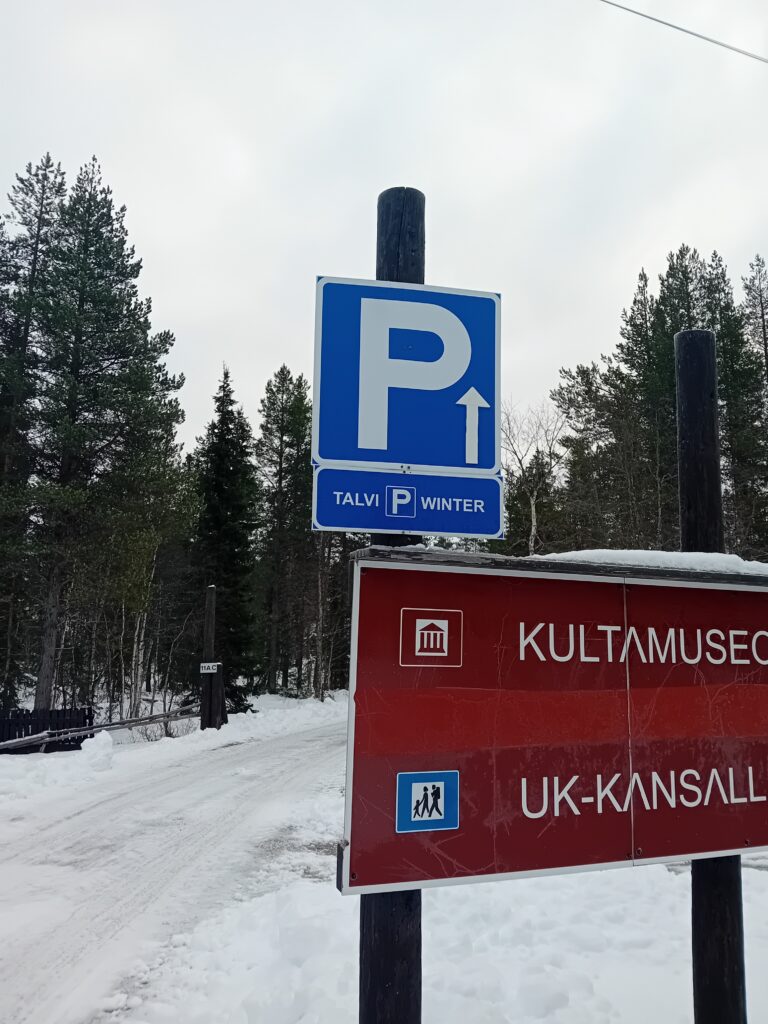
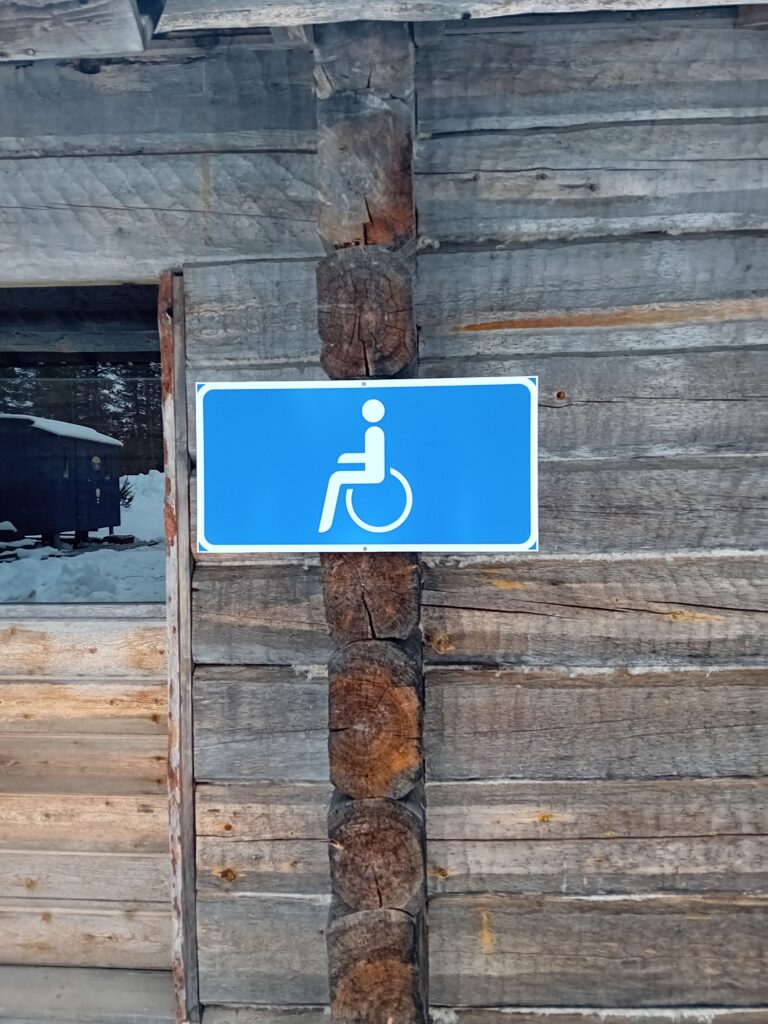
Gold Museum’s two parking lots are also open in winter. The smaller car park, more commonly known as the winter car park, is located next to the museum building and is clearly waymarked. Disabled parking is located next to the door of the museum, and is accessed by following the signs for the winter car park. 200 metres from the museum’s front door is the larger car park, which also serves the Urho Kekkonen National Park. From the larger park there is a marked route to the museum. In addition, you can access the museum from the direction of our neighbours the Gold Village and the Restaurant Wanha Waskoolimies.
Share your Gold Memory
A time of golden memories!
Share here your best/most interesting/funniest memory related to gold, gold prospecting, Finnish goldfields or any other topic related to the Finnish gold heritage. The topic could be a reminiscence about a gold prospector veteran, a funny coincidence in the goldfields, the discovery of a nugget or even a memorable visit to the Gold Museum and/or an event in Tankavaara!
You can use your own name or leave the story anonymously. By default, the stories will be treated anonymously. If you would like your name or nickname to be used with the Gold Story, please indicate the name in the space provided
Among those who left their contact information, we will draw 2 small round cut Lapland corundum and 5x 2 tickets to the Gold Museum. Tickets can be redeemed until the end of September 2024. The prize is transferable to another person. The draw will take place after the deadline and the winners will be contacted personally. The contact details will not be used for any other purpose and will be destroyed after the draw in accordance with the European Data Protection Regulation.
Gold Memories will become part of the Finnish gold heritage, which can be used in the activities of the Gold Museum (e.g. publications and exhibitions).
Share your Gold Memory here: https://forms.gle/Nms61mjt4sXmwqYg6
The deadline for responses is 30 September 2023.